
What Repeated Fire Alarm Activations Can Mean for Your Commercial Building
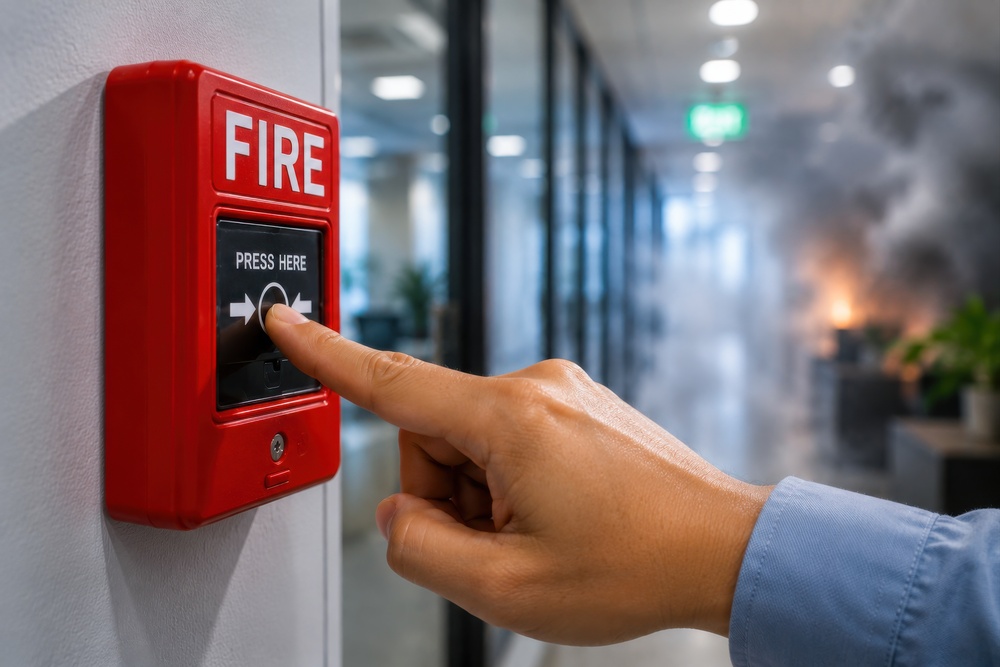
A fire alarm beeping repeatedly usually signals a low battery, dust in the sensor, or a wiring fault rather than an actual fire. For commercial buildings in West Michigan, repeated activations without an emergency present often point to maintenance issues that need attention before they become compliance problems. This guide explains why fire alarm beeping happens and when the issue calls for a licensed technician.
Key Takeaways
- Fire alarm beeping in commercial settings is usually tied to batteries, dust, wiring, or device age.
- A single chirp every 30 to 60 seconds typically signals a low battery or trouble condition, not fire detection.
- Three beeps followed by a pause often indicate actual smoke or heat detection in the system.
- Persistent or unexplained beeping should prompt an inspection to confirm code compliance and system reliability.
Common Causes of Repeated Fire Alarm Activations in West Michigan
A fire alarm that continues to beep or activate repeatedly does not always stem from the same issue. Identifying the underlying cause helps facilities teams resolve the problem more efficiently while reducing unnecessary disruptions and potential compliance concerns.
Low Battery Chirps in Battery-Backed Devices
Many commercial fire alarm devices include battery backup that chirps once the charge runs low. This chirp typically occurs every 30 to 60 seconds until the battery is replaced. Facilities using devices with 10-year lithium batteries may still experience this near the end of the battery’s rated life. Ignoring the chirp risks the device losing backup power during an actual outage.
Dust and Debris Inside Detector Chambers
Dust buildup inside a smoke detector’s sensing chamber can trigger false activations or interfere with accurate detection. This is common in facilities with construction dust, cooking residue, or HVAC particulate near detectors. A detector that keeps beeping despite a fresh battery may need cleaning or inspection rather than replacement. Regular inspection schedules typically catch this issue before it causes nuisance alarms.
Wiring Faults in Hardwired Fire Alarm Systems
A hardwired fire alarm beeping can indicate a loose connection, damaged wire, or grounding issue in the circuit. Unlike standalone battery units, hardwired systems draw power from the building’s electrical system and interconnect across zones. A single faulty connection point can cause beeping at multiple devices tied to the same circuit.
Diagnosing wiring issues generally requires a technician familiar with the specific panel and circuit layout.
End-of-Life Device Malfunctions
Fire alarm devices have a manufacturer-rated service life, often around 10 years, after which components degrade and false signals increase. A device nearing end of life may beep intermittently even with a new battery installed. This pattern differs from low-battery chirping because it persists after the battery issue is ruled out. Facilities should track installation dates to anticipate replacement needs before failures occur.
Environmental Triggers Unique to West Michigan Facilities
Humidity swings between West Michigan’s humid summers and dry winter heating seasons can affect detector sensitivity over time. Facilities near Grand Rapids, Lansing, and Kalamazoo often see seasonal beeping patterns tied to HVAC cycling and temperature shifts. Steam from commercial kitchens or manufacturing processes can also trigger nuisance alarms in detectors placed too close to those sources.
Understanding these local patterns helps facility managers distinguish environmental noise from genuine system faults.
Panel Trouble Signals Versus Alarm Signals
Fire alarm control panels distinguish between a trouble condition and an actual alarm condition, and the beeping pattern usually reflects which one is occurring. A trouble signal often sounds as a single beep repeating at intervals, while a true alarm condition sounds as three beeps followed by a pause. Facility staff should never assume a beeping panel is only a nuisance without confirming the panel’s displayed status.
Improper Device Placement or Installation
Detectors installed too close to HVAC vents, kitchen equipment, or high-traffic doorways are more prone to nuisance beeping. Airflow, temperature changes, and airborne particles near these locations can trigger sensors that would otherwise function normally elsewhere. This is a common issue in older commercial buildings where detector placement predates current best practices. Addressing placement issues often reduces false activations more effectively than repeated battery changes.
How to Prioritize Inspection, Repairs, and Compliance Next
Once the source of repeated fire alarm activations has been identified, the next step is determining the appropriate response. Addressing issues promptly and maintaining a consistent inspection schedule helps protect system reliability while supporting ongoing code compliance.
Document the Beeping Pattern Before Calling for Service
Facility staff should note whether the beeping is a single chirp, three beeps in a series, or continuous sound before contacting a technician. This detail helps determine whether the issue is battery-related, a wiring-related signal issue, or an actual detection event. Providing this information in advance can speed up diagnosis once a technician arrives. Clear documentation also supports any compliance records the facility maintains.
Schedule Routine Inspections Aligned With NFPA Standards
Commercial fire alarm systems are generally expected to undergo periodic inspection and testing consistent with applicable NFPA standards. Routine inspections catch battery degradation, sensor contamination, and wiring wear before they cause nuisance beeping or system failure. Facilities that skip scheduled inspections often discover problems only after a device begins malfunctioning. Keeping inspection records organized supports both safety and code compliance efforts.
Address Trouble Signals Promptly to Avoid Compliance Gaps
A fire alarm panel showing a trouble condition should not be left unresolved, since this can indicate a system component is not functioning as intended. Local authorities having jurisdiction may require documented correction of trouble conditions within a defined timeframe. Delaying repairs increases the risk that a system will fail to perform during an actual emergency. Prompt correction also reduces the chance of repeat nuisance activations.
Replace Batteries and Aging Devices on a Defined Schedule
Facilities benefit from tracking battery replacement dates and device installation dates across the entire fire alarm system. Devices approaching the end of their rated service life are more likely to produce unexplained beeping even after a battery change. Establishing a replacement schedule reduces emergency service calls tied to predictable component aging.
This approach also helps facilities budget for replacements before a failure forces an unplanned expense.
Know When Wiring or Panel Issues Require a Licensed Technician
Diagnosing a hardwired fire alarm beeping issue often involves tracing circuits, checking panel programming, and testing individual devices. This work typically requires a technician with training specific to fire alarm systems and, in some cases, coordination with a licensed electrician.
Attempting to resolve wiring issues without proper training can mask the underlying problem or create new ones. Facilities managers should treat unresolved wiring-related beeping as a priority service item.
Confirm Monitoring and Signal Reporting Function Correctly
Where a fire alarm system includes monitoring, facilities should confirm that trouble and alarm signals are reaching the monitoring service as intended. A beeping panel that fails to transmit signals correctly could leave a building without proper emergency notification. Testing signal transmission is typically part of a comprehensive inspection process. This step matters most for buildings where monitored response is part of the facility’s safety plan.
Build a Long-Term Maintenance Plan Instead of Reactive Fixes
Facilities that only address fire alarm beeping when it becomes disruptive often experience recurring nuisance alarms and compliance issues. Routine inspections, battery replacement, and scheduled maintenance help reduce these disruptions while keeping records organized for fire marshal inspections.
Get to the Root Cause of Repeated Fire Alarm Activations
Persistent fire alarm beeping in a commercial building deserves attention rather than a quick workaround. Fire Pros provides fire alarm inspection, repair, and monitoring support for commercial properties throughout West Michigan, including Grand Rapids, Lansing, and Kalamazoo.
If your building’s fire alarm keeps beeping or shows a trouble signal, contact us to schedule an inspection with a specialist.
Frequently Asked Questions
How do you stop a fire alarm from beeping?
Identify whether the beep is a single chirp or three beeps in a series, since each indicates a different issue. Replace the battery if applicable, then schedule an inspection if beeping continues.
How many beeps mean carbon monoxide?
A carbon monoxide alarm typically sounds four beeps in a series, repeating with a pause between sets. This pattern differs from smoke detection, which usually sounds three beeps followed by a pause.
Why is my wired fire alarm beeping?
A hardwired fire alarm may beep due to a loose wiring connection, grounding fault, or panel trouble signal. Diagnosing the exact cause typically requires a technician familiar with the building’s fire alarm circuit.
What does a fire alarm sound like when it detects carbon monoxide?
Carbon monoxide detection typically produces four beeps in a series, repeated at intervals, distinct from the three-beep smoke pattern. Building staff should treat this sound as an emergency requiring immediate evacuation and ventilation.
Category: Fire Alarms Let us help.
Fill out the form and a Fire Pros specialist will contact you.
Let us help.
Fill out the form and a Fire Pros specialist will contact you.