
What Class K Fire Extinguishers Protect Against in West Michigan Commercial Kitchens
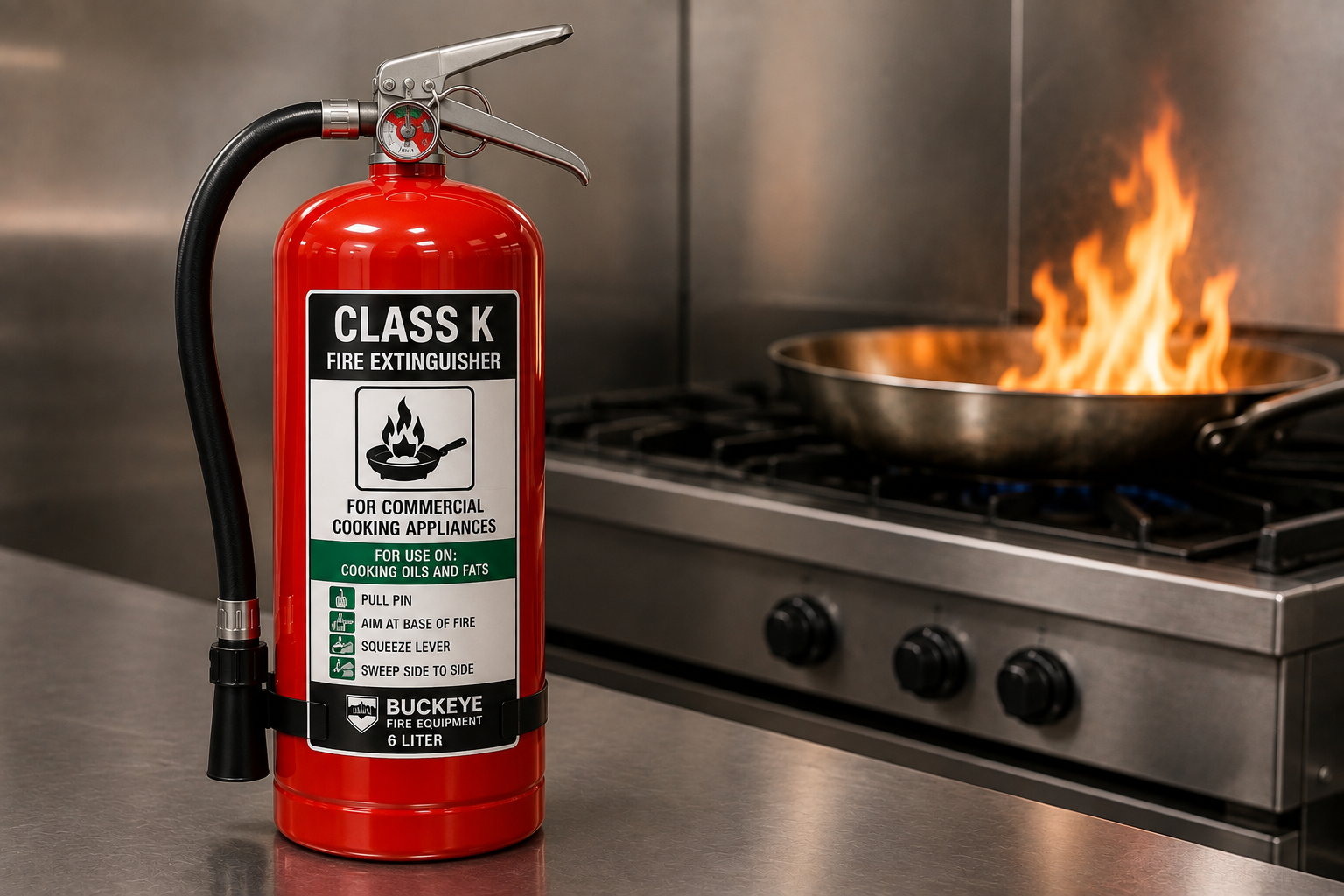
A class K fire extinguisher is designed to put out fires involving cooking oils, greases, and animal fats found in commercial kitchen equipment. West Michigan restaurants, food trucks, and institutional kitchens rely on this equipment to control grease fires before they spread. This blog explains what a class K fire extinguisher is used for, how it works, and when it needs inspection or replacement.
Key Takeaway
- A class K fire extinguisher uses a wet chemical agent to cool and smother burning cooking oils and fats.
- West Michigan commercial kitchens need class K units near fryers, griddles, and other high-heat cooking equipment.
- Class K extinguishers must be inspected regularly and replaced or serviced based on age and use.
- Working with a fire protection provider helps West Michigan kitchens stay ready for inspection and code review.
How Class K Fire Extinguishers Protect West Michigan Commercial Kitchens
Commercial kitchens across West Michigan face a unique fire risk from cooking oils and animal fats that burn hotter and reignite more easily than ordinary combustibles. Class K fire extinguishers are built specifically to address this hazard. Each subtopic below covers a distinct part of how this equipment functions in a working kitchen
What a Class K Fire Extinguisher Is Used For
A class K fire extinguisher is used for fires involving combustible cooking oils, greases, and animal fats commonly found in commercial cooking appliances. These fires behave differently than ordinary fires because the oil reaches very high temperatures. Standard extinguishing agents can cause the oil to splash or reignite, which is why kitchens need equipment made for this specific hazard.
What Is Inside a Class K Extinguisher
A class K wet chemical fire extinguisher contains a potassium acetate based agent. This agent reacts with hot cooking oil to form a soapy layer over the surface, a process called saponification. That layer cools the oil and cuts off oxygen, which helps prevent the fire from reigniting after the initial knockdown.
Why Class K Differs From Class B Extinguishers
Class B extinguishers are built for flammable liquids and gases, while class K units target the specific chemistry of hot cooking oil fires. A class B agent applied to a deep fryer fire can cause dangerous splattering because it was not designed for the extreme heat of cooking oil. Commercial kitchens need class K coverage in addition to any class B protection elsewhere in the building.
Common Placement Areas in Commercial Kitchens
Class K extinguishers are typically mounted near deep fryers, griddles, and other appliances that use large volumes of oil or grease. West Michigan kitchen layouts vary by concept, but placement near the highest heat sources gives staff the fastest access during an emergency. Local fire code enforcement often reviews placement during routine inspections.
Class K Extinguishers for Food Trucks
Food trucks and mobile kitchens face the same grease fire risk as full-service restaurants, often in a smaller and more confined space. A 6 liter class K fire extinguisher is a common size for these mobile units because it balances extinguishing capacity with limited storage room. West Michigan food truck operators should confirm their unit is rated for the cooking equipment they use.
How Class K Works With Kitchen Suppression Systems
Many commercial kitchens pair a class K fire extinguisher with an automatic kitchen suppression system installed above cooking equipment. The suppression system activates first to knock down a fire at the hood and appliance level, while the extinguisher gives staff a backup tool for smaller flare-ups. This layered approach reflects standard practice in commercial kitchen fire protection.
Why Signage and Symbols Matter
Every class K fire extinguisher is labeled with a distinct symbol showing a pan with flames, which helps staff identify the correct unit quickly during an emergency. Clear signage above the extinguisher location supports faster response and helps kitchen staff avoid grabbing the wrong extinguisher type under stress. This labeling is a standard feature reviewed during inspections.
When to Inspect and Replace Class K Fire Extinguishers
Class K fire extinguishers require regular inspection to stay ready for use, and West Michigan kitchens are subject to inspection schedules tied to applicable fire codes. The following subtopics outline what commercial stakeholders should watch for between professional service visits. For additional guidance on portable fire extinguisher inspection, maintenance, and testing requirements, refer to the National Fire Protection Association’s NFPA 10 standard overview.
Monthly Visual Checks
A monthly visual check confirms the extinguisher is mounted in its designated spot, the pressure gauge reads in the normal range, and the pin and tamper seal are intact. Kitchen managers in West Michigan often assign this task to a shift lead as part of a daily or weekly opening routine. Any damage, corrosion, or missing components should be flagged for professional review.
Annual Professional Inspection
An annual inspection by a qualified fire protection technician verifies the internal condition of the extinguisher, not just the exterior. This deeper check can catch issues that a visual walkthrough misses, such as agent degradation inside the cylinder. Commercial kitchens typically schedule this service alongside other required fire and life safety inspections.
Signs an Extinguisher Needs Service
A class K extinguisher may need service if the gauge shows low pressure, the cylinder shows dents or rust, or the wet chemical agent shows signs of separation. Grease and grime buildup around the nozzle can also signal that the unit has not been checked recently. Any of these signs should prompt a call for professional service before the next scheduled inspection.
Recharge and Replacement Timelines
After a class K extinguisher is discharged, even partially, it must be recharged or replaced before returning to service. Kitchens should never leave a used extinguisher in place assuming it still offers protection. A qualified technician can determine whether recharging the existing cylinder or replacing the unit is the better option based on its condition and age.
How Local Kitchen Volume Affects Wear
High volume kitchens that run fryers and griddles for extended hours can see faster wear on extinguisher components due to heat and grease exposure near the mounting location. West Michigan restaurants with long service hours or seasonal spikes, such as busy summer patio seasons, may benefit from more frequent visual checks between formal inspections. This is general industry guidance and not a substitute for a documented inspection schedule.
Documentation and Code Compliance
Commercial kitchens are generally expected to keep inspection tags current on each class K fire extinguisher as part of local fire code compliance. These tags provide a quick record of the last inspection date and help during a fire marshal visit. Keeping this documentation organized supports a smoother inspection process for West Michigan kitchen operators.
Keep Your Kitchen Ready With Class K Fire Extinguisher Service
Commercial kitchens in West Michigan depend on properly maintained class K fire extinguishers to handle grease and cooking oil fires. Fire Pros Fire Protection Service supports West Michigan businesses with inspection and maintenance for kitchen fire extinguishers and related suppression equipment.
Contact us today to schedule an inspection for your kitchen’s class K fire extinguishers.
Frequently Asked Questions
What Is the Difference Between a Class B and Class K Fire?
Class B fires involve flammable liquids or gases, while class K fires specifically involve hot cooking oils and animal fats. Class K requires a wet chemical agent because standard class B agents can cause hot oil to splatter dangerously.
What Is a Class K Fire Extinguisher?
A class K fire extinguisher is a portable unit filled with a wet chemical agent designed to extinguish fires involving cooking oils, greases, and animal fats. It is commonly found near fryers and griddles in commercial kitchens.
What Is the Best Extinguisher for a Class K Fire?
A class K wet chemical fire extinguisher is the appropriate choice for cooking oil and grease fires. Its agent cools the oil and forms a barrier that helps prevent the fire from reigniting after initial suppression.
Are Class K Extinguishers Safe for Home Use?
Class K extinguishers are built for high volume commercial cooking equipment, not typical home kitchens. Homeowners should consult local fire code guidance or a fire protection professional before selecting extinguisher types for residential use.
Category: Fire Extinguishers Let us help.
Fill out the form and a Fire Pros specialist will contact you.
Let us help.
Fill out the form and a Fire Pros specialist will contact you.