
How Fire Alarm Components Work Together to Protect West Michigan Businesses
A fire alarm system relies on several connected parts working in sequence to detect smoke or heat and alert people quickly. Understanding how these components function together helps West Michigan business owners make informed decisions about maintenance, upgrades, and code compliance. This guide breaks down each major part of a fire alarm system and explains how they support one another during an emergency.
Key Takeaways
- A fire alarm system depends on detection, control, and notification components working together without delay.
- Addressable systems pinpoint the exact device that triggered an alarm, while conventional systems identify only a general zone.
- Businesses should review panel age, device coverage, and monitoring status before planning any fire alarm system upgrade.
- Routine inspection and testing help commercial properties in West Michigan stay ready and code compliant.
How Each Fire Alarm Component Supports Faster Emergency Response
Every part of a fire alarm system plays a specific role in detecting a fire and getting people out safely. When one component fails or is poorly maintained, the entire response chain can slow down. The sections below outline how each major part contributes to that process.
The Fire Alarm Control Panel Coordinates the Entire System
The fire alarm control panel, often called the FACP, acts as the central processing hub for the entire system. It receives signals from detection devices, interprets what type of alarm condition exists, and triggers the appropriate notification response. Commercial buildings in West Michigan typically house the panel in a location accessible to responding fire personnel.
Initiating Devices Detect the First Signs of Fire
Initiating devices, including smoke detectors, heat detectors, and pull stations, are the sensors that first identify a fire condition. These devices send a signal to the control panel the moment they detect smoke, heat, or manual activation. Placement and spacing of these devices directly affect how quickly a fire is detected in a commercial space.
Pull Stations Give Occupants a Manual Way to Sound the Alarm
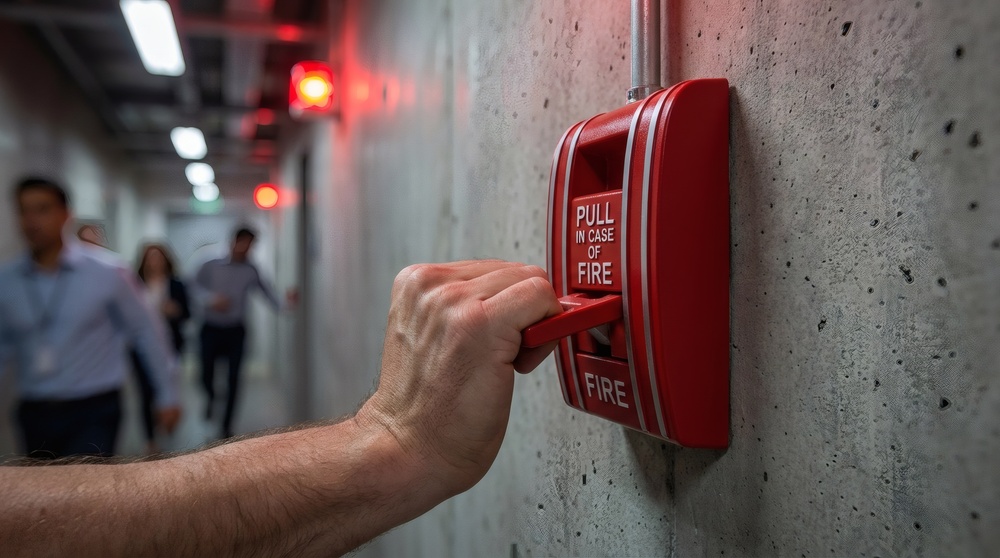
A pull station allows a person who sees smoke or fire to manually trigger the alarm system before automatic detectors activate. These are typically mounted near exits so occupants can activate them while evacuating. Manual activation remains an important backup layer even in buildings with advanced automatic detection.
Notification Appliances Alert Occupants to Evacuate
Notification appliances, such as horns, strobes, and speakers, are the components that alert people inside the building once the panel confirms an alarm condition. These devices must be loud and visible enough to reach occupants in all areas of a commercial space, including restrooms and mechanical rooms. Notification timing and placement are often reviewed during code inspections.
Addressable Systems Identify the Exact Device That Triggered the Alarm
An addressable fire alarm system assigns a unique identifier to each device, allowing the control panel to display precisely which detector or pull station is activated. This level of detail helps responding personnel and staff locate the fire faster in larger commercial buildings. Addressable systems have become increasingly common in multi-story or multi-tenant properties.
Conventional Systems Report Alarms by Zone Rather Than Device
A conventional fire alarm system groups devices into zones, so the panel indicates which general area triggered the alarm rather than the specific device. This setup tends to suit smaller buildings with fewer detection points. Conventional systems remain in use across many older commercial properties in West Michigan.
Monitoring Connects the System to Emergency Response
Fire alarm system monitoring links the control panel to a monitoring service that can notify emergency responders when an alarm activates. This connection matters most when a building is unoccupied, such as overnight or on weekends.
A monitored fire alarm system adds a layer of response that occupant notification alone cannot provide. The U.S. Fire Administration also emphasizes the importance of monitored fire alarm systems as part of a comprehensive fire protection strategy for commercial buildings
What West Michigan Businesses Should Review Before System Upgrades
Before upgrading or replacing a fire alarm system, business owners should evaluate a few key factors that affect cost, scope, and long-term reliability. Reviewing these areas ahead of time helps avoid unexpected delays once installation begins. The following points outline what commercial stakeholders in West Michigan commonly need to assess.
Panel Age and Manufacturer Support Affect Upgrade Options
Older control panels, including some Simplex fire alarm system models still in service, may no longer receive manufacturer support or replacement parts. Businesses should confirm whether their current panel can be serviced or if a full replacement is more practical. This affects both project timeline and total scope of work.
Device Coverage Should Match Current Building Layout
Buildings that have been renovated, expanded, or repurposed since their original fire alarm system installation may have gaps in detector or notification coverage. A review of current floor plans against existing device placement helps identify areas that need additional coverage. This is especially relevant for tenant spaces that have changed use over time.
Conventional Versus Addressable Should Be Evaluated for Building Size
Business owners planning an upgrade should weigh whether an addressable or conventional system fits their building’s size and layout. Larger or multi-tenant buildings generally benefit from the device-level detail addressable systems provide. Smaller single-zone buildings may not require that level of detail to remain effective.
Monitoring Status Should Be Confirmed Before Any Work Begins
Businesses should verify whether their fire alarm system is currently monitored and whether that monitoring will need to be temporarily interrupted during upgrade work. Coordinating with the monitoring provider ahead of time helps avoid gaps in coverage. This step is often overlooked until work is already underway.
Frequent False Alarms May Signal an Underlying Issue
A fire alarm system that keeps going off without an actual fire condition often points to a maintenance issue rather than a design flaw. Dust buildup, aging detectors, or wiring faults are common causes. Addressing the root cause before an upgrade can prevent the same problem from recurring in a new system.
Local Code Requirements Should Guide the Scope of Work
Fire alarm system requirements are tied to applicable building and fire codes, which can vary based on occupancy type and building size. Business owners should confirm current code requirements early in the planning process. This helps ensure the finished system aligns with what inspectors will expect to see.
Keep Your Fire Alarm System Ready
A reliable fire alarm system depends on regular inspection, timely repairs, and a clear understanding of how each component works. Fire Pros helps commercial property owners across West Michigan review their existing systems and plan upgrades that fit their building’s needs.
Contact us to request a quote or schedule an inspection for your fire alarm system.
Frequently Asked Questions
What are the three types of fire alarm systems?
Fire alarm systems generally fall into conventional, addressable, and wireless categories. Conventional systems report by zone, addressable systems identify individual devices, and wireless systems use radio signals instead of hardwired connections between components.
How much should a fire alarm system cost?
Cost varies widely based on building size, device count, and whether it is a new installation or an upgrade. Business owners should request a site-specific quote rather than relying on general pricing estimates found online.
What is the best fire alarm system for your home?
The best system depends on home size and layout. Homeowners should look for detectors that cover sleeping areas and common spaces, paired with monitoring where local resources allow for that connection.
Does the fire department still give out free fire detectors?
Some local fire departments offer free smoke detector programs, though availability varies by municipality and funding. Businesses and homeowners should contact their local fire department directly to confirm current program availability.
Category: Fire Alarms Let us help.
Fill out the form and a Fire Pros specialist will contact you.
Let us help.
Fill out the form and a Fire Pros specialist will contact you.