Recharge, Repair, or Replace? What Your Fire Extinguisher Needs and When
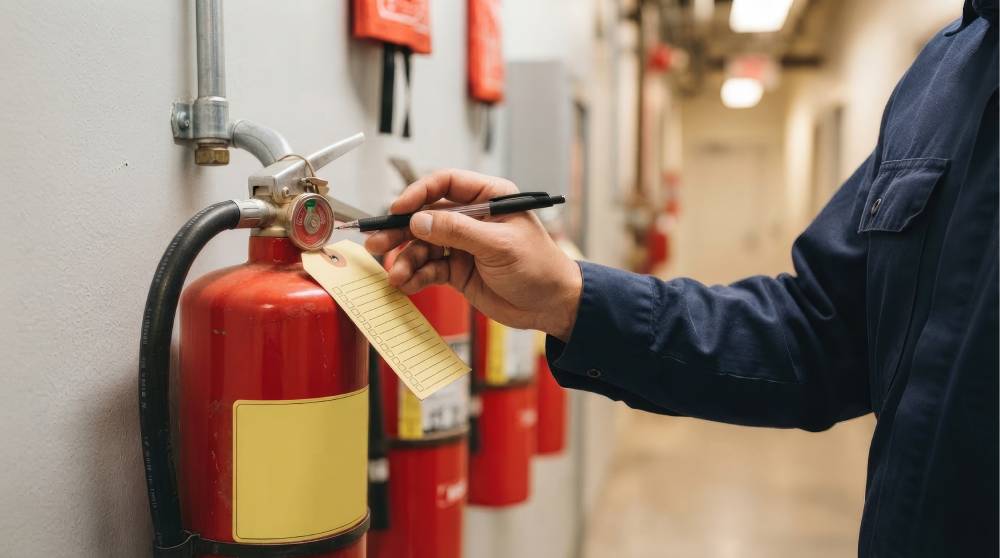
Fire extinguishers need more than a monthly glance to stay compliant and ready for use. Fire extinguisher maintenance includes annual inspections, six-year internal exams, and twelve-year hydrostatic testing depending on the unit type. Building owners in Grand Rapids and across West Michigan often assume a passing annual inspection means an extinguisher is fully cleared, but deeper service intervals still apply. This guide breaks down when a unit should be recharged, repaired, or removed from service entirely.
Key Takeaways
- Annual inspections do not replace the six-year internal exam or twelve-year hydrostatic test extinguishers eventually needed.
- Dry chemical extinguishers typically require a six-year internal maintenance check and a twelve-year hydrostatic test.
- Service tags record the date, technician, and company responsible for each maintenance visit performed.
- Falling out of compliance can lead to failed fire code inspections and gaps in coverage during an emergency.
How to Decide Whether to Recharge Repair or Replace
Deciding between recharge, repair, or replacement depends on the extinguisher’s age, condition, and inspection history. Facility managers in Grand Rapids should weigh cost, code compliance, and remaining service life before choosing a path. Each option below addresses a different scenario a commercial property might face.
When Recharging Is the Right Call
Recharging is appropriate any time an extinguisher has been discharged, even partially, or has lost pressure below the operating range shown on the gauge. Every six years, extinguishers should be recharged and receive routine maintenance. A recharge restores the extinguishing agent and pressure so the unit performs as designed if it’s needed again.
When a Repair Makes More Sense Than a Replacement
Repairs are usually the better option when the extinguisher’s shell, valve, or hose is still structurally sound but a component like the pressure gauge or pin has failed. Replacing a single part is typically less costly than swapping the entire unit. Commercial properties with larger extinguisher inventories often see repairs extend the useful life of a fleet by several years.
When the Six-Year Internal Exam Applies
Stored-pressure extinguishers that require a twelve-year hydrostatic test must also go through a six-year internal examination. Every 6 years, stored pressure fire extinguishers that require a 12-year hydrostatic test, such as dry chemical extinguishers, must be emptied and subjected to an internal examination by a trained technician. This step catches internal corrosion or residue buildup that a visual inspection alone would miss.
When the Twelve-Year Hydrostatic Test Is Required
Hydrostatic testing verifies the extinguisher cylinder can still hold pressure safely. The 12-year requirement is a hydrostatic test where the cylinder is pressure-tested to verify structural integrity, in addition to annual maintenance. Facilities that skip this step risk operating a cylinder that could fail under pressure.
When Replacement Is the Only Option
Non-rechargeable extinguishers cannot go through internal exams or hydrostatic testing. Non-rechargeable extinguishers are allowed under NFPA 10 but must be removed from service 12 years from their manufacture date, and they cannot receive 6-year internal examinations or hydrostatic testing. Once that date arrives, replacement is the only path to staying compliant.
When Physical Damage Signals Removal From Service
Dents, corrosion pitting, or a cracked hose are signs an extinguisher should be pulled from service regardless of its age. Physical damage compromises the pressure vessel in ways an inspection tag can’t account for. West Michigan facilities dealing with older equipment in warehouses or parking structures should watch closely for this kind of wear.
When Manufacture Date Records Determine the Decision
If a facility can’t produce a legible manufacture date, the extinguisher should be treated as overdue for its next service interval. Illegible or missing stamps create compliance gaps that surface during fire code inspections.
Keeping a written log of manufacture and service dates for every unit avoids this problem before it starts.
Key Extinguisher Maintenance Priorities for West Michigan Businesses
Beyond the recharge-repair-replace decision, several ongoing priorities keep a commercial extinguisher program compliant year over year. These priorities apply across office buildings, warehouses, and multi-tenant properties throughout Grand Rapids and West Michigan.
Keeping Service Tags Current and Legible
Every serviced extinguisher should carry a tag showing the date of service, the technician’s initials, and the servicing company’s name. A missing or unreadable tag can create a compliance risk because service and maintenance records help demonstrate that required inspections have been performed.
Property managers should check tags during every walkthrough, not just during the annual visit. The U.S. Occupational Safety and Health Administration (OSHA) guidance on portable fire extinguishers provides inspection and maintenance requirements for workplace extinguishers.
Scheduling Around Building Occupancy and Turnover
Commercial properties in West Michigan often see tenant turnover or seasonal staffing changes that shift where extinguishers are needed most. Coordinating maintenance visits around these changes helps avoid extinguishers being overlooked in newly occupied spaces. This is especially relevant for multi-tenant office buildings adding or reconfiguring suites.
Matching Extinguisher Type to Hazard Class
Dry chemical, CO2, and wet chemical extinguishers each carry different testing intervals and are rated for different hazard classes. Placing the wrong extinguisher type in a space, such as a dry chemical unit in a commercial kitchen, creates both a safety gap and a compliance issue.
Facility managers should confirm the extinguisher class matches the hazards present in each zone of the building.
Tracking Multiple Units Across a Portfolio
Businesses managing several properties across West Michigan benefit from a centralized log of every extinguisher’s location, type, and next service date.
Without a system, it’s easy to lose track of which units are approaching their six-year or twelve-year milestones. A simple spreadsheet or digital tracker prevents units from slipping past their required service window.
Budgeting for Six-Year and Twelve-Year Service Cycles
Six-year and twelve-year maintenance costs more than a routine annual inspection because of the labor and parts involved. Building owners who budget for these cycles in advance avoid unexpected costs when a batch of extinguishers reaches the milestone at the same time. Staggering purchase dates when replacing units can also help spread out future service costs
Responding Quickly to Failed Inspections
When an extinguisher fails an inspection, whether for low pressure, damage, or an expired service date, it should be removed from its location right away. Leaving a failed unit in place creates a false sense of coverage for employees and visitors.
Fast turnaround on repair, recharge, or replacement keeps the space code-compliant without a prolonged gap in protection.
Documenting Compliance for Fire Code Reviews
Local fire marshals and insurance auditors may request records for inspections, maintenance visits, and testing performed on a building’s extinguishers. Keeping documentation organized and accessible helps demonstrate that required inspections and maintenance have been completed and can make fire code reviews more efficient.
NFPA 10, Standard for Portable Fire Extinguishers, includes requirements for inspection record keeping, including maintaining records that demonstrate required periodic inspections have been performed.
Get Your Fire Extinguishers Inspected and Serviced
Staying ahead of six-year and twelve-year service intervals protects your building and keeps you ready for fire code reviews. Fire Pros provides fire extinguisher inspection and maintenance services for commercial properties in Grand Rapids and throughout West Michigan.
Contact us to schedule an inspection or ask about your building’s current service status.
Frequently Asked Questions
What are the maintenance requirements for fire extinguishers?
Extinguishers need monthly visual checks, annual professional inspections, and deeper service at six-year and twelve-year intervals depending on the extinguisher type. Dry chemical units typically follow this full cycle, while non-rechargeable units are removed from service after twelve years.
How often should a fire extinguisher be serviced?
Most commercial extinguishers need an annual inspection by a trained technician, a six-year internal exam for stored-pressure units, and a twelve-year hydrostatic test. Monthly visual checks by staff should also happen between professional service visits.
Is a 10 year old fire extinguisher still good?
A ten-year-old rechargeable extinguisher can still be good if it has passed its required annual inspections and any applicable six-year maintenance. Non-rechargeable units approaching twelve years from manufacture should be scheduled for replacement soon.
What is the proper maintenance procedure for a fire extinguisher?
Proper maintenance includes checking pressure, examining the hose and pin, verifying the service tag is current, and confirming the unit hasn’t passed its six-year or twelve-year testing deadline. A certified technician should perform any internal exam or recharge.
Category: Fire Extinguishers Let us help.
Fill out the form and a Fire Pros specialist will contact you.